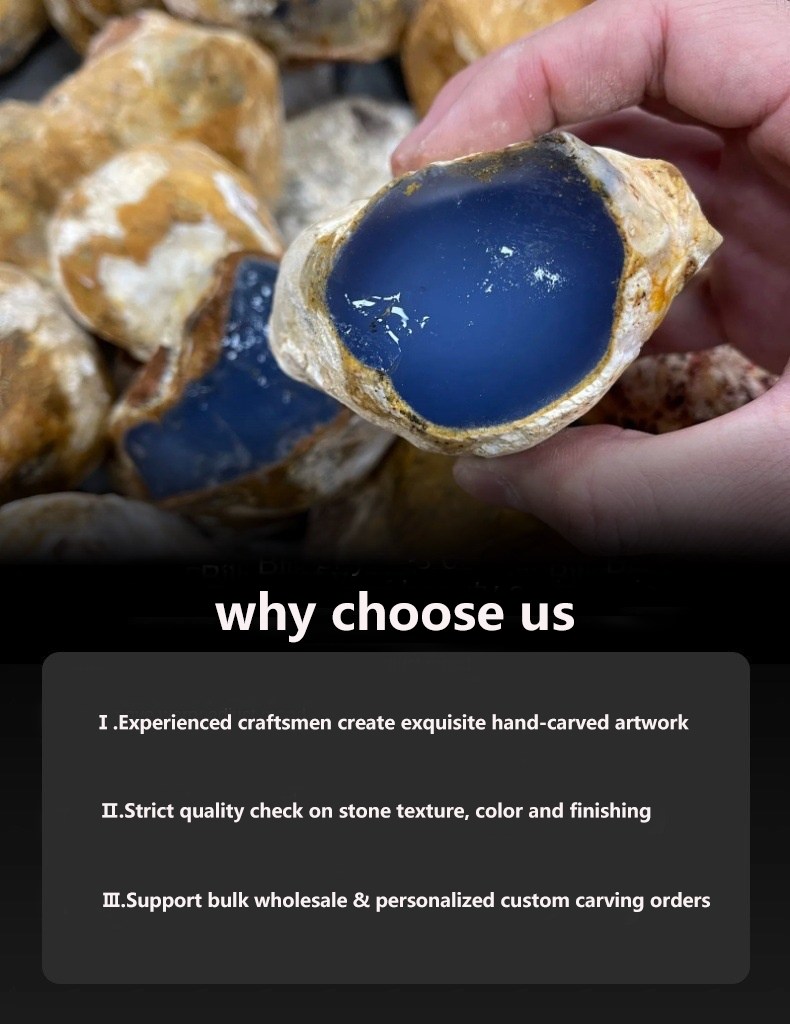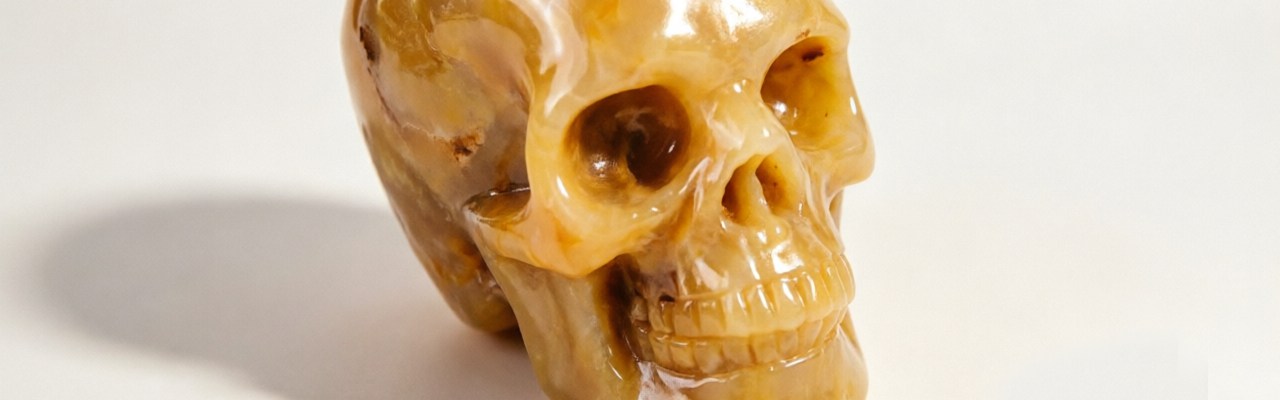
Que crâne en jaspe calcédoine Tu viens de le recevoir – il est enfin arrivé.
Cette pierre présente naturellement des tons jaune chaud. Certaines sont d'un jaune pâle, presque beurre, d'autres tirent sur le miel ou l'ambre clair. Elle est plus lourde que prévu. Fraîche au toucher, douce sur le front. Vous la posez sur une table. Et maintenant ?
Honnêtement, la question principale que se posent les gens après avoir acheté un crâne en cristal n'est ni le prix ni la qualité. C'est plutôt : « Où est-ce que je vais mettre ça ? »
Posez-le sur une étagère et il disparaît. Posez-le sur votre table de chevet et il paraît un peu bizarre. Exposez-le en magasin et les clients passeront leur chemin.
La plupart du temps, ce n'est pas la faute du crâne. Vous n'avez tout simplement pas encore trouvé le bon endroit.
J'ai discuté avec pas mal de personnes ayant acheté des crânes en jaspe calcédoine : des commerçants, des décorateurs d'intérieur et des amateurs de pierres. Au fil du temps, j'ai observé cinq mises en scène qui fonctionnent particulièrement bien. Rien de sophistiqué. Rien de spirituel, sauf si on le souhaite. Juste des solutions pratiques pour mettre en valeur la couleur naturellement chaude et jaune de ce crâne.
Les voici.
1. L'astuce de l'étagère : utiliser un fond foncé pour faire ressortir le jaune
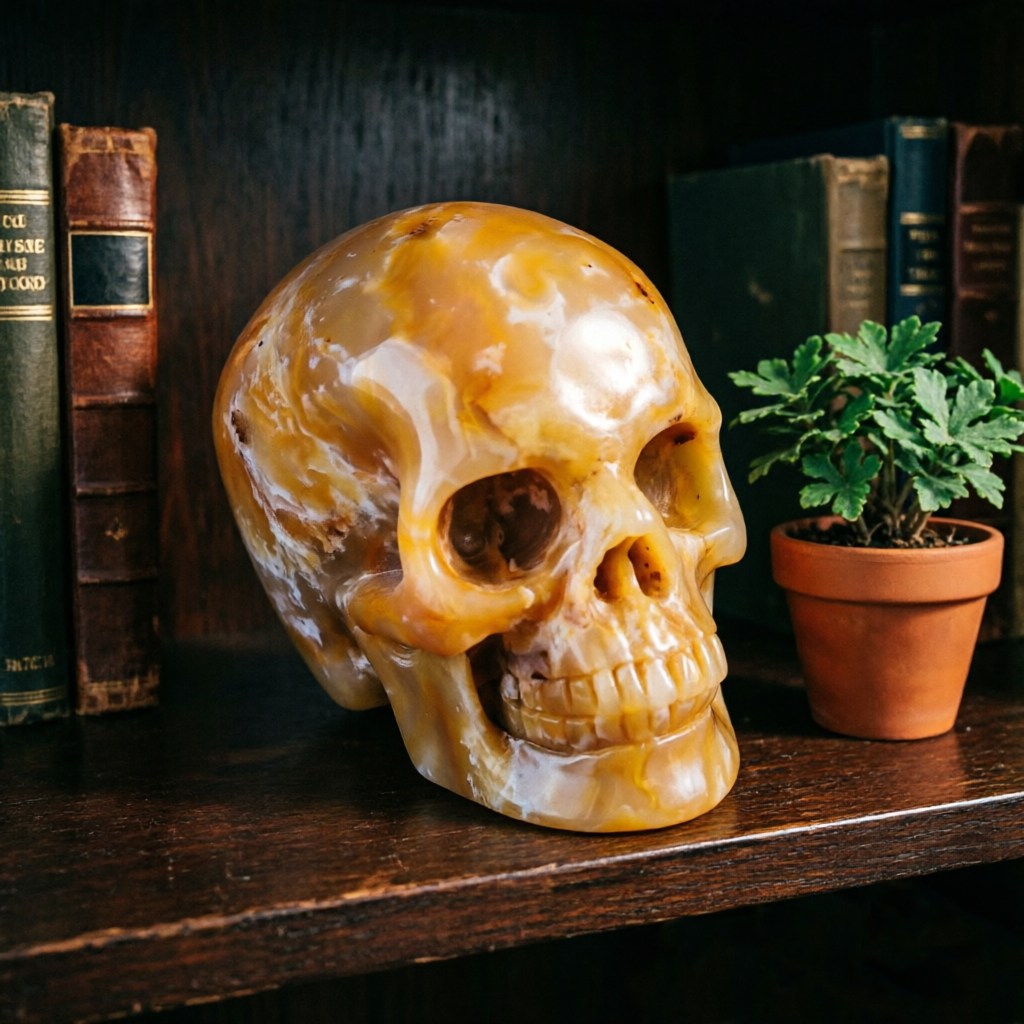
Ce jaune chaud présente un petit inconvénient : sur un fond clair, il peut paraître fade. Si votre bibliothèque est blanche ou en bois clair, un crâne jaune clair se fondra parfaitement dans le décor. De loin, on pourrait le confondre avec un savon.
Solution simple. Prenez quelques livres à la couverture foncée : bleu marine, vert foncé, marron foncé. Posez-en deux à plat, placez-en un debout et laissez un espace entre les deux. Posez votre crâne juste là, légèrement décentré. La couverture foncée des livres sert de fond et, soudain, ce jaune chaud naturel ressort.
Ajoutez une petite plante à côté. Un petit pothos ou une simple feuille de sansevieria feront parfaitement l'affaire. Le vert et le jaune étant voisins sur le cercle chromatique, leur association est naturelle et harmonieuse.
Pour les commerçants : Si vous exposez des crânes en jaspe calcédoine à vendre, évitez les plateaux blancs ou beiges. Privilégiez les plateaux en bois foncé ou les socles en acrylique noir. Le contraste mettra davantage en valeur le jaune chaud, même à distance.
2. Le rebord de fenêtre de l'après-midi – Laissez la lumière agir
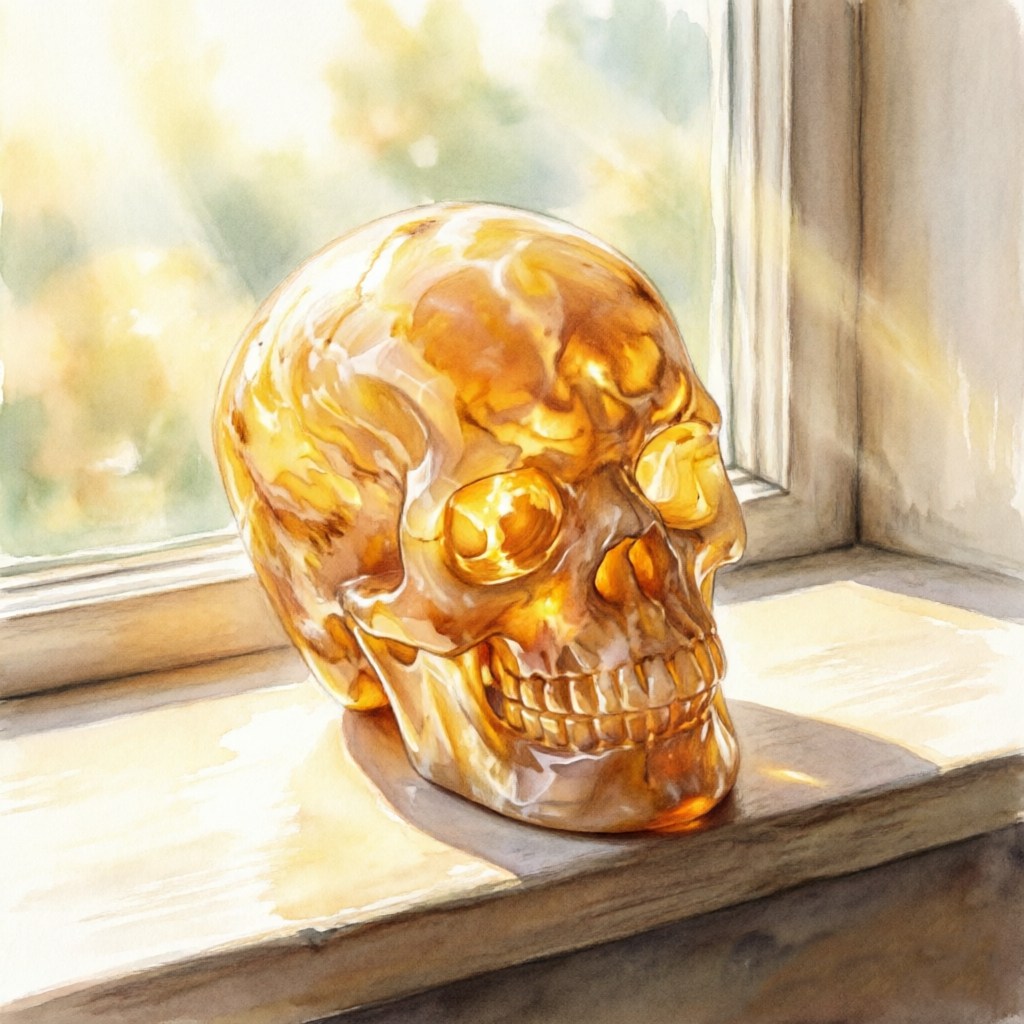
Le jaspe calcédoine est souvent légèrement translucide. Pas autant que le quartz clair, mais suffisamment pour que, lorsque la lumière du soleil frappe une partie plus fine – la tempe, la pommette –, il se pare d'une douce lueur couleur miel. C'est la propriété naturelle de cette pierre.
Trouvez un rebord de fenêtre qui bénéficie d'une lumière indirecte l'après-midi. Pas le soleil brûlant de midi (qui abîme la pierre à la longue), mais plutôt la lumière douce et rasante des heures 15 ou 16 heures.
Orientez le crâne vers la fenêtre, mais tournez-le légèrement pour qu'un côté capte davantage la lumière que l'autre. Là où la pierre est plus fine, vous verrez le bord s'illuminer : or pâle près de la surface, ambre plus foncé là où elle est plus épaisse.
Laissez le rebord de la fenêtre propre. Un crâne, peut-être une gousse de graine séchée ou une petite bougie. C'est tout. Ne l'encombrez pas de fleurs artificielles poussiéreuses ni de vieux courrier.
Une cliente m'a un jour envoyé la photo de son crâne en jaspe calcédoine posé sur le rebord de la fenêtre de sa salle de bain, orientée à l'ouest. Elle m'a expliqué que la lumière de fin d'après-midi l'illuminait juste au moment où elle rentrait du travail, et que c'était devenu son objet préféré à contempler en se lavant les mains. Un emplacement inhabituel, certes, mais qui lui convenait parfaitement.
3. Présentoir de comptoir – Trois crânes de tailles différentes, jaune chaud au centre
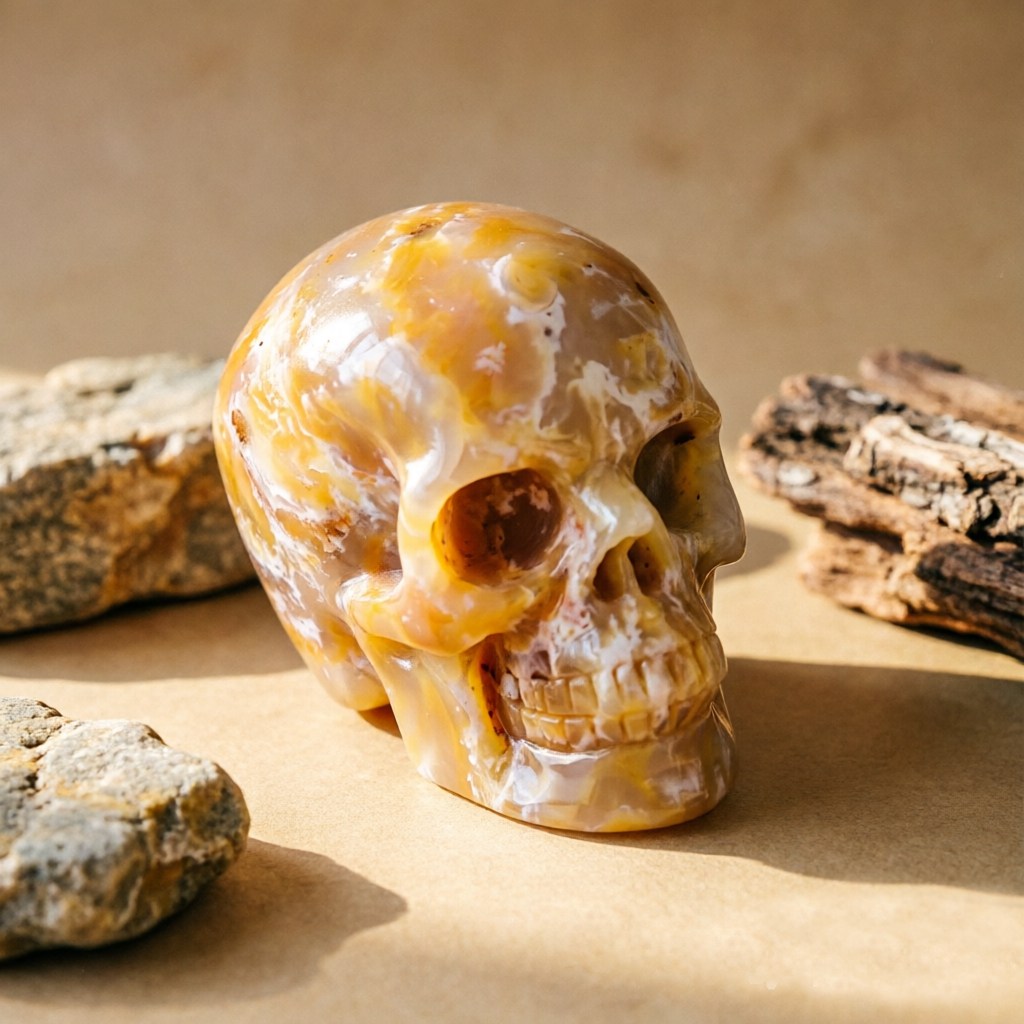
Si vous êtes commerçant, résistez à la tentation de ranger les crânes par couleur. Pour une présentation sur un comptoir, la variété des tailles est plus importante. Et comme le jaspe calcédoine est naturellement jaune chaud, il n'est pas nécessaire de rechercher une « couleur particulière ».
Prenez trois crânes : un grand (environ 10 cm), un moyen (5 à 7,5 cm) et un petit (2,5 cm). Disposez-les sur un petit plateau sombre. Placez le plus grand à l’arrière, le plus petit devant et le plus coloré au centre. Vous pouvez aussi inverser l’ordre, mais veillez à ce que le crâne central attire le regard.
Pourquoi ? Le regard se porte naturellement au centre. Et le jaune chaud et doux du jaspe calcédoine attire davantage l'attention que beaucoup de pierres ternes ou chargées.
Ajoutez un panneau simple : « Sculptée à la main dans du jaspe calcédoine naturel, chaque pièce est unique. » Inutile de s'étendre sur les vertus métaphysiques si ce n'est pas votre style. Laissez la pierre parler d'elle-même.
Une astuce que j'ai apprise des acheteurs en gros : changer la tête de mort placée au centre tous les deux ou trois jours. Si une pièce reste au centre pendant deux semaines, replacez-la. Vous seriez surpris de voir à quelle fréquence elle se vend.
4. Buffet ou table basse – À associer avec du verre ambré et du laiton
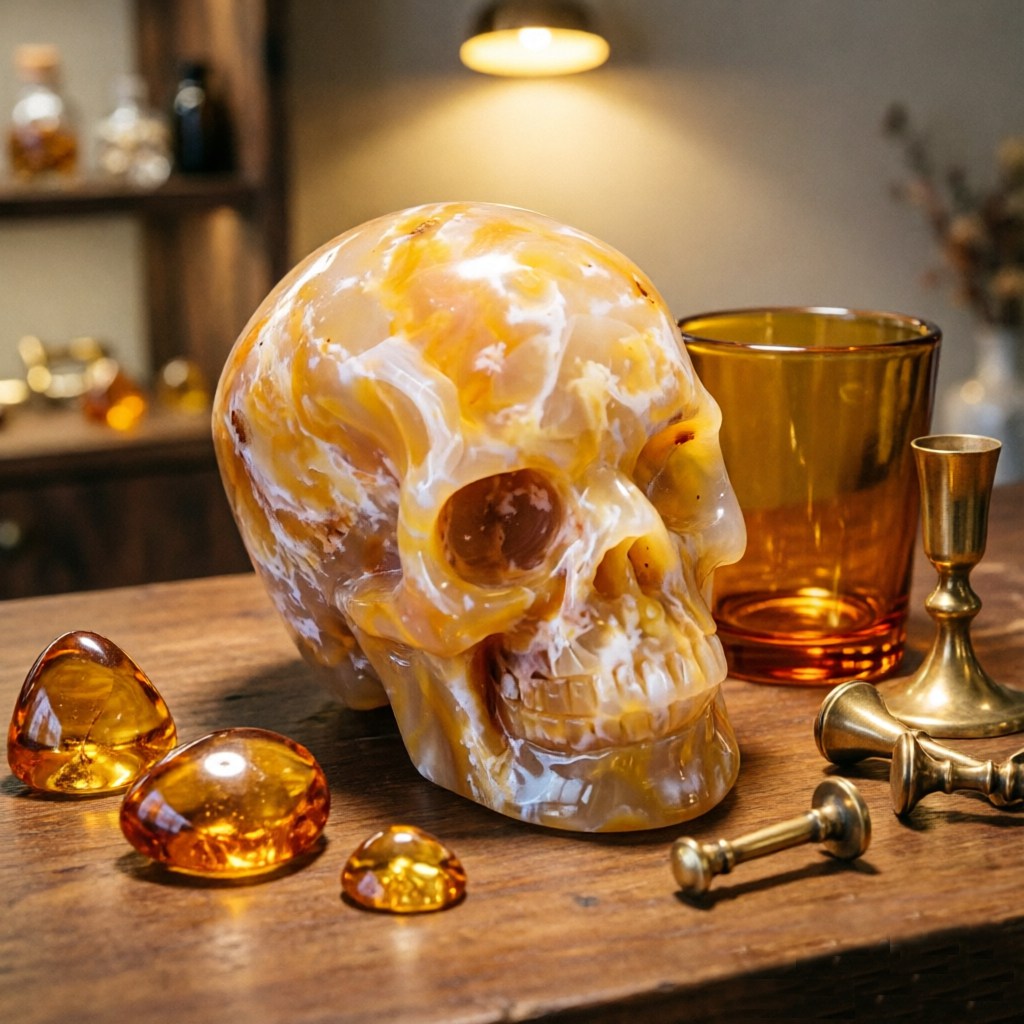
La teinte jaune chaude du jaspe calcédoine est du plus bel effet dans une salle à manger ou un salon. Cette couleur s'harmonise naturellement avec les objets du quotidien : verres, tasses, petits vases.
Choisissez un coin d'un buffet ou d'une table basse (pas au centre, ce serait trop formel). Placez le crâne sur un petit plateau sombre. Ajoutez ensuite deux objets à côté : un objet en verre ambré (un petit vase ou un verre à pied) et un objet en laiton (un bougeoir, une petite cuillère, voire un marque-page en laiton).
Pourquoi ces deux-là ? Le verre ambré appartient à la même famille de couleurs, mais il est translucide et léger. Le laiton apporte un éclat métallique qui contraste avec l’aspect mat de la pierre. Ensemble, ces trois matériaux – pierre, verre et métal – composent une petite nature morte d’une simplicité naturelle.
Pour les cafés ou les restaurants : Placez un petit crâne en jaspe calcédoine près de la caisse ou sur une étagère. Les clients qui attendent de payer le prendront souvent en main, attirés par sa couleur chaude et originale. J'ai déjà vu des gens entrer pour un café et repartir avec un crâne. C'est véridique.
5. Bureau ou coiffeuse – À portée de main, non dissimulée
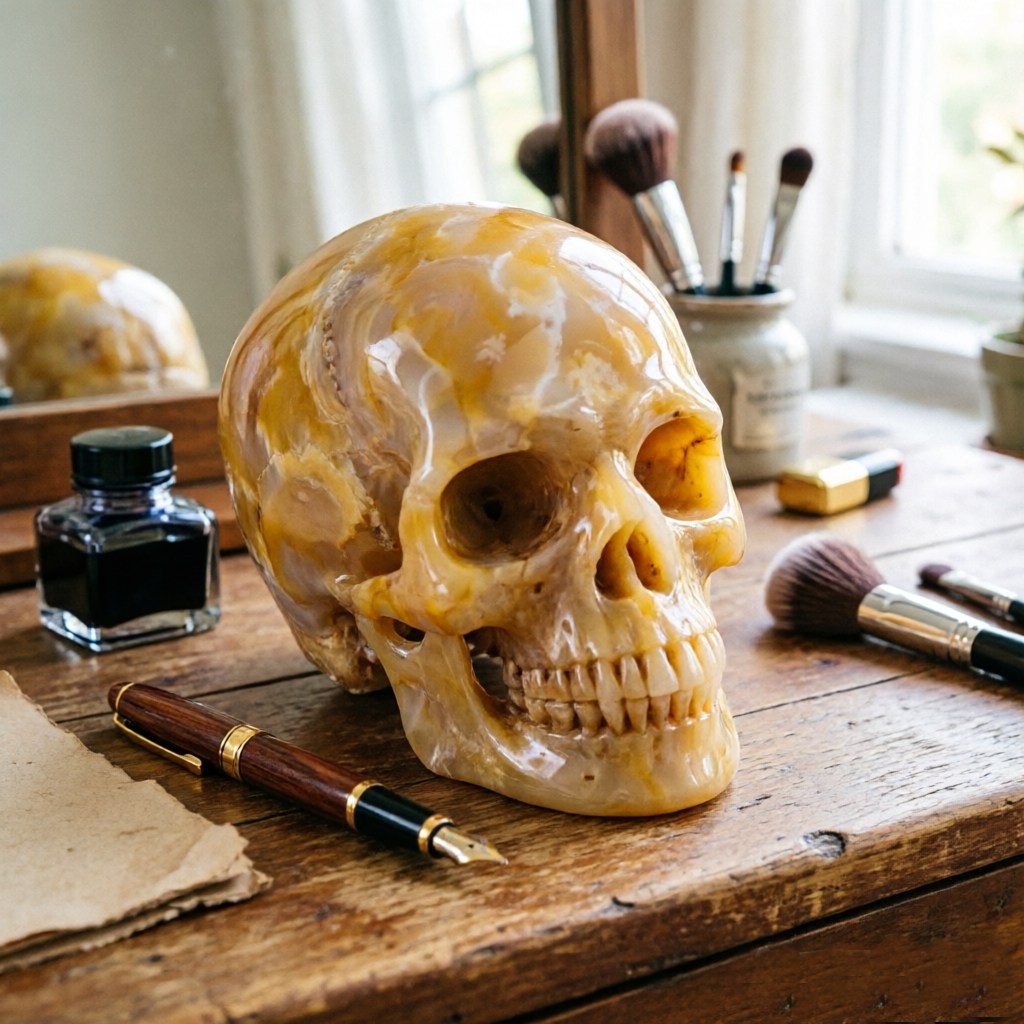
C'est la configuration la plus simple, mais la plupart des gens se trompent. Ils placent le crâne derrière leur écran d'ordinateur, où ils ne le voient jamais. Puis ils s'étonnent que cela leur paraisse inutile.
Placez-le à côté de votre clavier, à gauche ou à droite, suffisamment près pour pouvoir le toucher sans avoir à tendre le bras. Positionnez-le légèrement en dessous du niveau des yeux afin que, lorsque vous levez les yeux de votre clavier, vous aperceviez ce bref éclair jaune chaud dans votre vision périphérique.
Même principe pour un meuble-lavabo. Placez-le à côté du miroir, pas en face. La lumière du matin, un aperçu de ce jaune chaud et naturel pendant que vous vous brossez les dents : c’est tout l’intérêt.
Une céramiste m'a confié qu'elle conservait un petit crâne en jaspe calcédoine sur le rebord de sa fenêtre, au-dessus de son tour de potier. Elle m'a expliqué que la poussière d'argile s'y était déposée au fil du temps, et que le frottement de ses mains lui avait conféré une patine douce et usée qu'elle préférait à son aspect poli d'origine. Ce n'est pas du goût de tout le monde. Mais cela prouve que la plus belle décoration est parfois celle qui se crée naturellement.
Quelques erreurs à éviter (tirées de véritables erreurs)
Ne posez pas un crâne en jaspe calcédoine sur une table blanche contre un mur blanc. Il paraîtra sale. Ajoutez un dessous de verre foncé ou un linge plié en dessous.
Évitez de regrouper trop d'objets jaunes. Un crâne, une tasse jaune et des fleurs jaunes : c'est une overdose de jaune. Laissez cette touche de jaune chaud être la seule à cet endroit.
N’utilisez pas de spots à lumière chaude. La lumière naturelle ou les LED à température de couleur neutre (environ 4 000 K) sont idéales. Les lumières chaudes peuvent donner à cette teinte jaune naturelle un aspect gras ou artificiel.
Pourquoi Jaspe calcédoine Fonctionne avec ces configurations
D'autres pierres pourraient convenir à ces idées. Mais le jaspe calcédoine présente quelques avantages discrets.
C'est un jaune naturellement chaud – ni aussi vif que l'améthyste, ni aussi froid que l'obsidienne. Sa couleur varie du jaune beurre pâle au miel profond, ce qui lui permet de s'intégrer à la plupart des palettes de couleurs : moderne, rustique, bohème, voire industrielle.
Et comme chaque crâne est sculpté à la main dans de la pierre naturelle, il n'y en a pas deux qui présentent exactement la même nuance de jaune ni les mêmes veinures. Ainsi, quelle que soit la mise en scène que vous choisirez, votre crâne sera véritablement unique. Ce n'est pas un argument marketing, mais simplement la réalité du travail avec un matériau naturel.
Dernière réflexion
Vous n'avez pas besoin d'un coussin en velours ni d'un projecteur. Le plus souvent, un crâne en jaspe calcédoine a simplement besoin d'un emplacement bien pensé – un endroit où vous le verrez tous les jours, où il pourra capter un peu de lumière et occuper un peu d'espace.
Essayez l'une de ces cinq configurations cette semaine. Ou essayez-les toutes, en déplaçant le crâne jusqu'à trouver la position idéale. Il n'y a pas de mauvaise réponse. Juste un morceau de pierre, sculpté à la main, qui trouvera sa place chez vous ou dans votre magasin.
Besoin d'une sculpture à la main crâne en jaspe calcédoine Pour votre propre espace ? Nous les fabriquons – prix de gros, devis en 24 h, personnalisation complète. N’hésitez pas à nous contacter.


 English
 Français
 عربي
عربي Deutsch