Pourquoi la personnalisation est importante aujourd'hui
Le marché du cristal a connu une croissance fulgurante ces dernières années. Dans le seul comté de Donghai, capitale chinoise du cristal, le commerce annuel a dépassé les 46 milliards de yuans en 2024, employant plus de 300 000 personnes. Cette croissance est fantastique, mais elle comporte un revers : Tout le monde vend les mêmes choses.
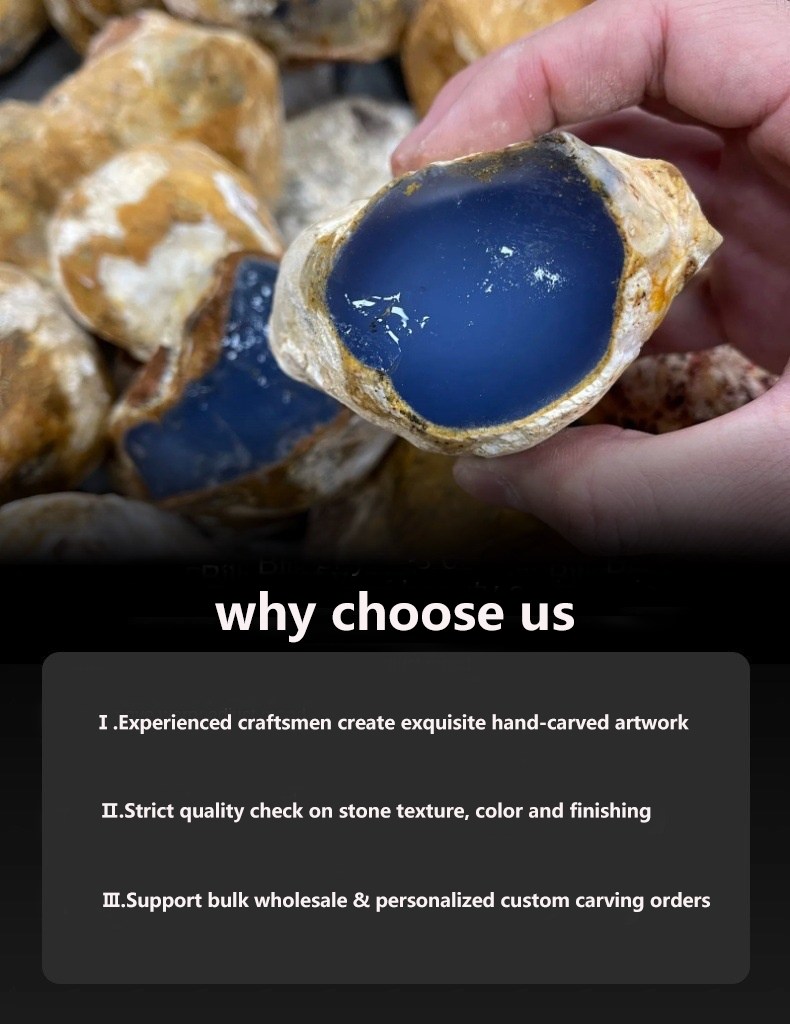
Tu vois améthyste crânes, quartz rose sphères, et Calcédoine bleue On trouve des pendentifs similaires sur des dizaines de sites web. Lorsque les produits sont identiques, le seul critère de différenciation restant est le prix, et c'est une course effrénée vers le bas.
C’est précisément pourquoi la gravure sur cristal personnalisée, via les services OEM (Original Equipment Manufacturer) et ODM (Original Design Manufacturer), est devenue un atout majeur pour les acheteurs B2B. Au lieu de se concurrencer sur les prix, Vous créez quelque chose qui appartient exclusivement à votre marque.
OEM ou ODM : lequel convient le mieux à votre entreprise ?
De nombreux responsables des achats confondent ces deux termes. Voici une version abrégée :
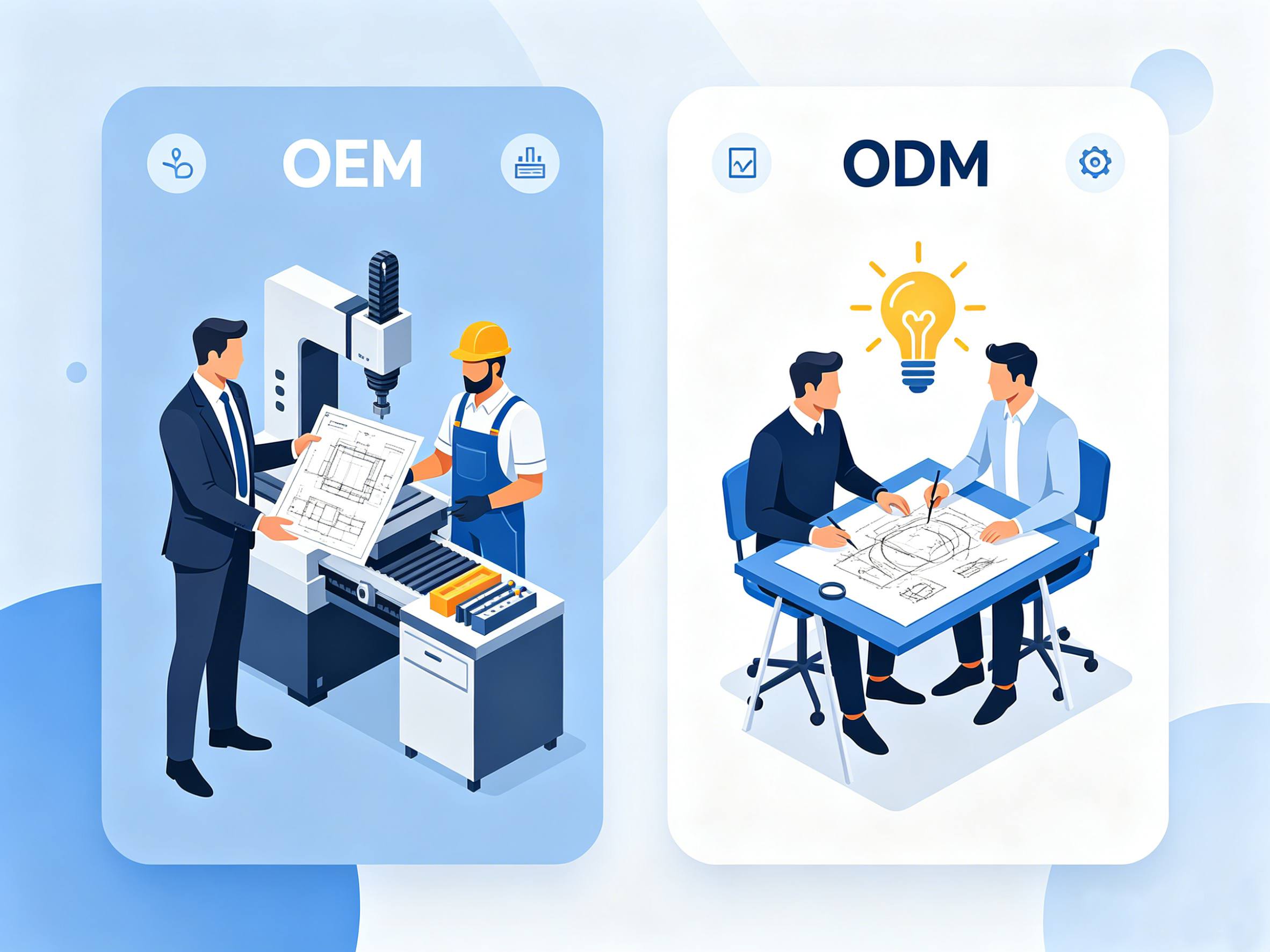
OEM (Fabricant d'équipement d'origine) Vous fournissez le design, le plan ou l'échantillon. L'usine le fabrique selon vos spécifications et vous y apposez votre marque. Cette solution est idéale si vous disposez déjà d'une équipe de conception interne ou d'une vision produit claire.
ODM (Fabricant de conception originale) Vous partagez vos idées, vos objectifs et votre public cible. L'usine prend en charge l'intégralité du processus, de la conception à la production, des croquis aux produits finis. Cette solution est idéale pour les détaillants et les entreprises de cadeaux qui possèdent une marque mais manquent de ressources en design.
En termes simples : Optez pour un fabricant d'équipement d'origine (OEM) si vous avez un design prêt à l'emploi ; choisissez un fabricant d'équipement d'origine (ODM) si vous avez un concept et avez besoin d'aide pour le concrétiser.
Que pouvez-vous personnaliser exactement ?
Plus que vous ne le pensez. La personnalisation ne se limite pas à la modification de la forme ; elle englobe plusieurs niveaux :
sélection des matériaux – Améthyste, citrine, quartz rose, calcédoine bleue, obsidienne, fluorite… chaque cristal a son propre prix, sa propre palette de couleurs et son « énergie » propre. Le matériau que vous choisissez définit à la fois votre structure de coûts et votre clientèle cible.
Taille et silhouette Des crânes miniatures de la taille d'un pouce aux grandes pièces décoratives pour bureau, nous créons des crânes extraterrestres, des figures animales, des formes géométriques et des œuvres d'art abstrait, au-delà du crâne humain classique. Plus la forme est originale, plus il est difficile pour nos concurrents de la copier.
Technique de sculpture – Sculpture à la main pour les objets de collection haut de gamme ; usinage CNC pour les productions en série moyennes et régulières ; gravure laser pour les motifs internes 3D ; et traitement par ultrasons pour les travaux de filigrane complexes.
Identité de marque – Votre logo gravé sur le socle, un emballage personnalisé aux couleurs et avec des éléments décoratifs à votre nom, et même des certificats d'authenticité à votre marque. Ces petites attentions transforment une pierre ordinaire en un cadeau mémorable.
Solutions d'emballage – Découpes en mousse intérieure sur mesure, boîtes extérieures et fiches d'information. Un bon emballage ne se contente pas de protéger : il valorise le produit et justifie un prix de vente plus élevé.
Flux de travail typique d'une commande personnalisée
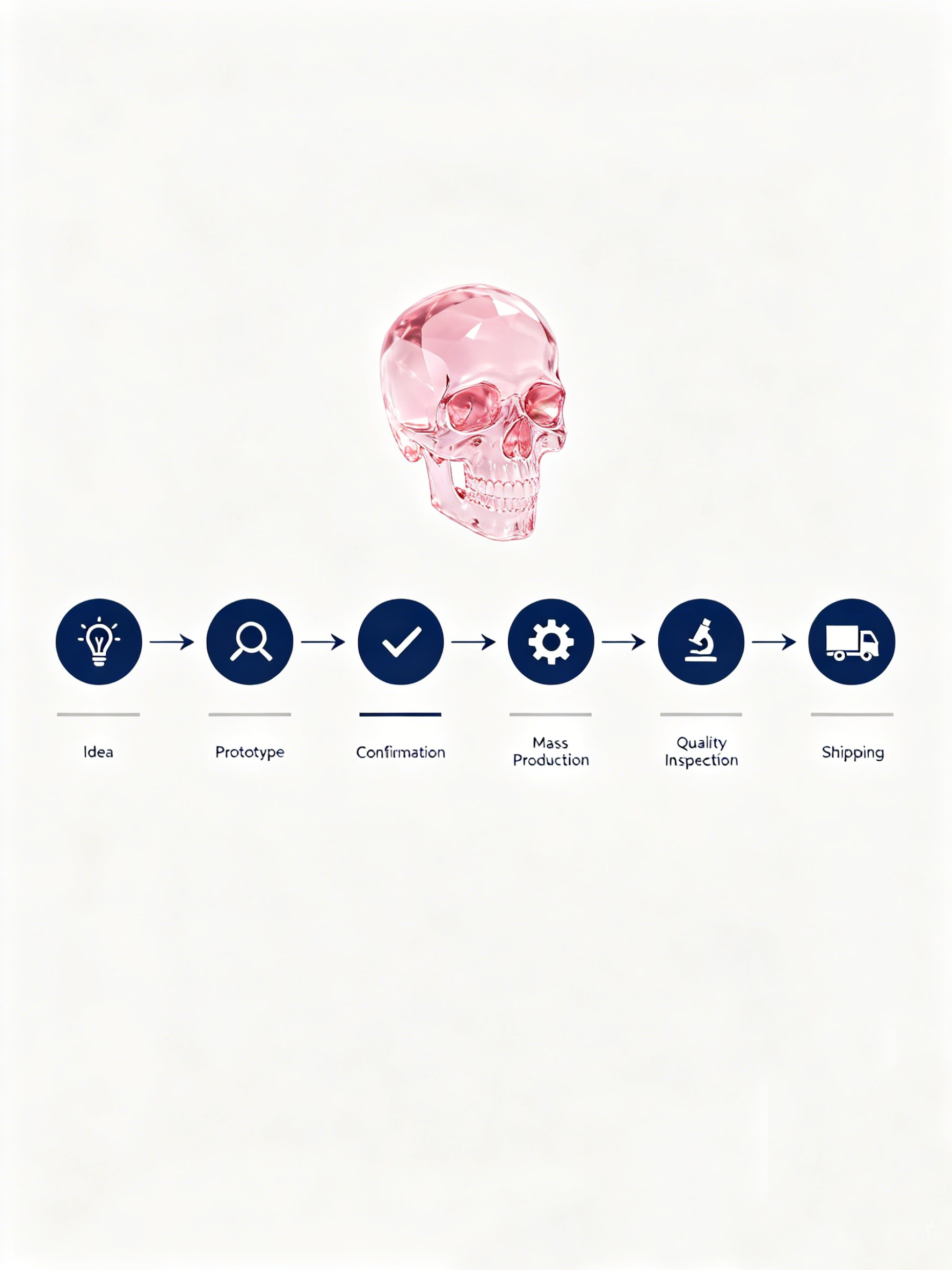
Voici comment se déroule généralement une commande personnalisée B2B, étape par étape :
Présentation des exigences – Vous nous indiquez le matériau, la taille, la forme, la quantité souhaitée, le budget et toute demande particulière.
Conception et échantillonnage – Nous créons des croquis conceptuels et produisons un prototype physique.
Approbation de l'échantillon – Vous examinez l’échantillon, demandez des ajustements si nécessaire et donnez votre feu vert.
production en vrac – Une fois l’échantillon finalisé, nous passons à la production à grande échelle.
Contrôle qualité et emballage Chaque article est vérifié et nous l'emballons selon vos instructions.
Expédition – Nous avons mis en place la logistique nécessaire pour que votre commande arrive en toute sécurité à votre domicile.
Le cycle complet prend généralement 2 à 4 semaines, en fonction de la complexité et de la taille de la commande.
Les quantités minimales de commande (QMC) varient. Certaines usines commencent à partir de 20 piècesD'autres en exigent 100 ou plus. Si vous n'avez jamais passé de commande personnalisée, je vous recommande vivement de commencer par une petite commande d'essai. Testez la qualité, la communication et les délais de livraison avant de vous engager pour une commande importante.
Conseils pratiques pour les acheteurs B2B
Fort de plusieurs années d'expérience auprès d'acheteurs internationaux, voici mon conseil sincère :
Ne jamais négliger l'échantillon. Les photos et les vidéos peuvent être trompeuses. Demandez toujours un échantillon physique et jugez-le vous-même.
Mettez les normes de qualité par écrit. Ne vous fiez pas aux promesses verbales. Définissez clairement les tolérances acceptables concernant la taille, les variations de couleur et la finition de surface dans votre contrat d'achat. Cela protège les deux parties.
Portez une attention particulière à l'emballage. Les cristaux sont fragiles. Demandez à votre fournisseur de vous montrer son test d'emballage, surtout pour les envois internationaux. Une pièce magnifiquement sculptée qui arrive cassée est une perte totale.
Commencez petit, apprenez vite. Votre première commande personnalisée ne sera probablement pas parfaite. Ce n'est pas grave. Commandez une petite série, recueillez les commentaires de vos clients et peaufinez vos spécifications pour la prochaine fois.
Réflexions finales
La gravure sur cristal personnalisée n'est pas un luxe réservé aux grandes marques ; c'est une stratégie concrète pour tout acteur B2B souhaitant se démarquer. Que vous optiez pour l'OEM (votre design, notre production) ou l'ODM (votre idée, notre conception et production), l'objectif reste le même : transformer une pierre ordinaire en un produit unique. ton Histoire de la marque.
Nous proposons des services OEM/ODM complets, incluant la sélection des matériaux, la conception des formes, les techniques de gravure, la gravure de logos et l'emballage personnalisé. Si vous envisagez une gamme personnalisée, Contactez notre équipe B2B Pour un devis gratuit et un échantillon, contactez-nous. Créons ensemble quelque chose d'unique, qui vous ressemble.


 English
 Français
 عربي
عربي Deutsch