— Un constat réaliste du terrain, avec des données sur les flux financiers actuels.
La question que tout le monde se pose
« En tant que propriétaire d'une petite entreprise, je n'ai jamais eu autant de mal qu'au cours des 6 derniers mois. Je vends des cristaux depuis plus de 6 ans. Y a-t-il d'autres personnes qui ressentent la même chose ? »
Ce post sur r/Crystals a suscité de nombreuses réactions. En parcourant le subreddit, on constate que le même sentiment se répand : les commerçants se plaignent d’une baisse de fréquentation, de marges réduites et de clients qui semblent dépenser moins.
En résumé : Oui, c'est plus difficile qu'avant. Mais non, le secteur n'est pas en train de mourir.
Permettez-moi de vous montrer ce que disent les données — et ce que nous constatons sur le terrain.
Les chiffres ne mentent pas.
Commençons par une vue d'ensemble. Le marché mondial des produits en cristal était évalué à environ 6,1 milliards de dollars en 2025 et devrait atteindre 8,4 milliards de dollars d'ici 2035., avec un taux de croissance annuel composé (TCAC) de 3,3 %C'est de la croissance — lente, certes, mais de la croissance.
Mais c'est là que ça devient intéressant. Cristaux et minéraux Cette catégorie, qui comprend les cristaux naturels, les pierres précieuses et les bijoux en cristal commercialisés pour leurs vertus thérapeutiques et la décoration spirituelle de la maison, a enregistré des ventes en ligne totales de 49 millions de dollars en 2025, vers le bas 10 à 20 % par rapport à l'année précédentePour 2026, les revenus devraient encore diminuer. 0–5%.
Parallèlement, le plus large Cristaux et pierres précieuses marché — pierres précieuses brutes et taillées, perles spéciales et fournitures pour la fabrication de bijoux — généré 211 millions de dollars de ventes en ligne en 2025, en haut 20 à 50 % par rapport à l'année précédentePour 2026, la croissance devrait toujours se maintenir. 10 à 20 %.
Alors, quelle est la conclusion à tirer ? Le marché ne se contracte pas de manière généralisée. Il est en pleine mutation. La mode de la « décoration spirituelle pour la maison » se calme. Mais les matières premières et les produits finis utilisés en joaillerie et en artisanat ? Le marché est toujours en croissance.
Ce qui continue réellement à pousser
Nous constatons deux points positifs évidents de notre côté de la chaîne d'approvisionnement.
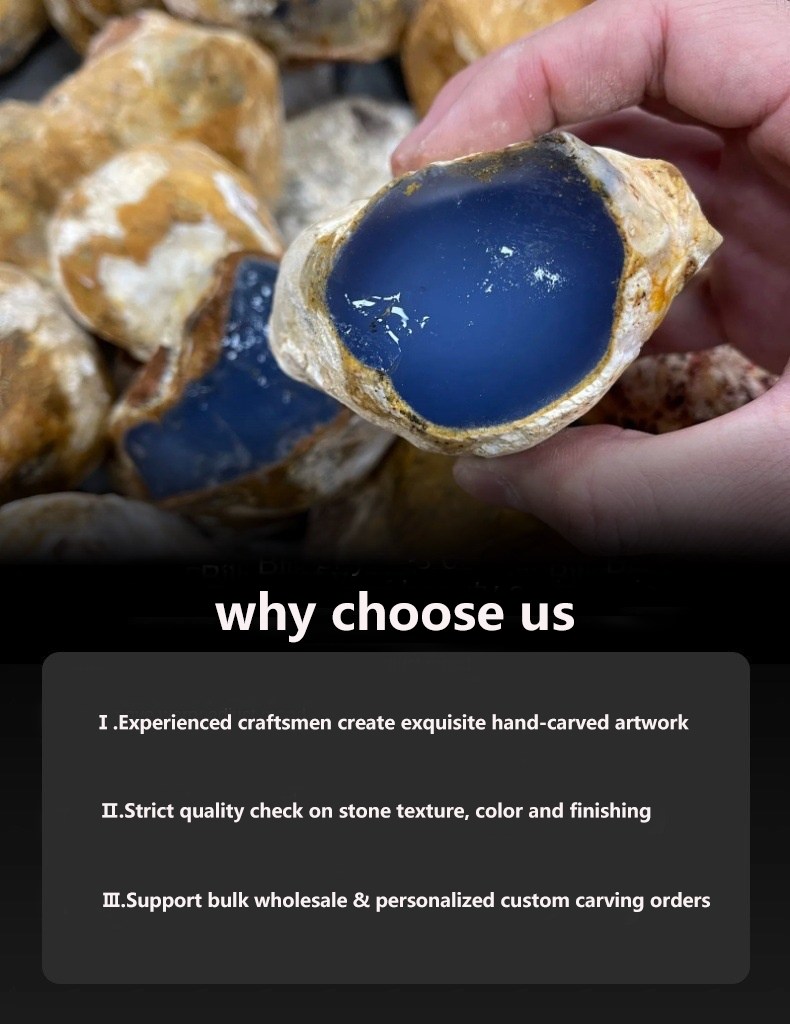
1. Calcédoine bleue sculpture et bijoux
Le marché mondial des bijoux en calcédoine était évalué à 1,666 milliard de dollars en 2024** et devrait atteindre **2,892 milliards de dollars d'ici 2031, en croissance à un TCAC de 8,2%On s'attend à ce que les boucles d'oreilles en calcédoine seules poussent à partir de De 5,09 milliards de dollars en 2025 à 8,53 milliards de dollars en 2031 à un TCAC de 8,99 %.
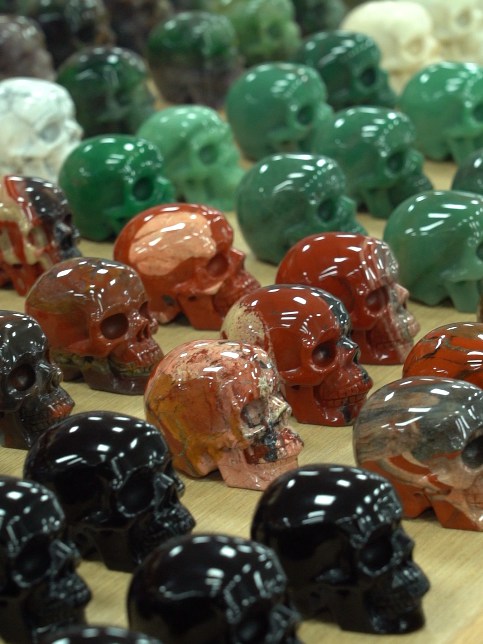
Pourquoi est-ce important ? La calcédoine bleue présente un avantage unique : son prix abordable la rend idéale pour les bijoux du quotidien, tout en lui conférant un cachet exceptionnel pour les sculptures. Dans notre atelier, nous avons constaté une nette augmentation des commandes de crânes et de sculptures animalières en calcédoine bleue au cours des 12 derniers mois. Les détaillants qui ont même légèrement orienté leurs stocks vers la calcédoine bleue font état d’une rotation des stocks plus rapide.
2. Cadeaux d'entreprise et de dirigeants
Il s'agit du canal que la plupart des détaillants négligent. Le marché mondial des cadeaux d'entreprise devrait croître à partir de De 886,56 milliards de dollars en 2025 à 956,93 milliards de dollars en 2026, un TCAC de 7,9 %D'ici 2030, on prévoit qu'il dépassera 1,31 billion de dollars.
Sculptures en cristal personnalisées — gravure spéciale crânesLes presse-papiers personnalisés et les cristaux gravés au laser en 3D sont de plus en plus plébiscités par les entreprises en quête de cadeaux haut de gamme à prix abordable. Ces commandes sont généralement plus importantes, moins sensibles au prix et plus prévisibles que les achats en magasin.
Où se situe la marge
La plus grosse erreur que commettent les détaillants est de vouloir rivaliser sur les prix avec les grandes plateformes de vente en ligne. C'est une bataille perdue d'avance.
Ce que vous peut La victoire est la artisanat et personnalisation jeu. Sculptures en cristal — crânes, animaux, sphères — permettent d'obtenir systématiquement des prix plus élevés et offrent de meilleures marges que les pierres brutes ou poliesUne sculpture bien placée peut donner Marge de 4 à 6 fois le prix de grosLa même pierre polie ? Peut-être deux fois plus.
Voici un bref aperçu de ce que nous observons en termes de potentiel de marge par type de produit :
Si vous êtes un détaillant qui a du mal à réduire ses marges, la solution n'est pas de baisser vos prix à tout prix, mais de réorienter votre offre vers des produits sculptés à plus forte marge et des commandes personnalisées.
L'avantage de l'usine
Voici ce que nous disons à nos partenaires commerciaux : Acheter directement à l'usine est la mesure la plus économique que vous puissiez prendre.
Lorsque vous achetez par l'intermédiaire d'un distributeur, vous payez ses frais généraux, son entreposage et sa marge bénéficiaire, généralement un Marge de 30 à 50 % En plus du prix d'usine, cette marge disparaît lorsque vous achetez directement. Vous obtenez le même produit, souvent avec une plus grande flexibilité sur les quantités minimales de commande et la personnalisation, pour un prix nettement inférieur.
C'est particulièrement important en 2026. La pression sur les prix est bien réelle.et la production et les prix évoluent dans des directions différentes.L'écart entre ce qui est produit et ce qui est payé se creuse.Ce sont les détaillants qui éliminent les intermédiaires qui survivent à la crise.
Nous proposons des commandes d'échantillons, une vérification vidéo des stocks disponibles et des quantités minimales de commande flexibles pour les nouveaux acheteurs B2B.Si vous ressentez un ralentissement, la meilleure chose à faire n'est pas d'attendre que cela passe, mais de restructurer votre chaîne d'approvisionnement.
En résumé
L'industrie du cristal est-elle en berne ? Non. Mais c'est différent.
L'époque où l'on gagnait facilement de l'argent avec des pierres roulées génériques et des lots basiques est révolue. Les détaillants qui prospéreront en 2026 sont ceux qui :
Le marché mondial de la lithothérapie devrait à lui seul croître à partir de De 1,06 milliard de dollars à 2,7 milliards de dollars d'ici 2033 à un TCAC de 11,15 %La demande est toujours là. Elle se déplace simplement vers d'autres produits et d'autres canaux.
Adaptez-vous, ou vous serez laissés pour compte.


 English
 Français
 عربي
عربي Deutsch