Le commentaire qui résume tout
Parcourez le subreddit r/Crystals ces derniers temps et vous remarquerez un changement. Les publications ne proviennent plus seulement de collectionneurs de longue date. Elles viennent de personnes qui ont découvert les cristaux la semaine dernière et qui sont devenues insatiables.
« Je n’ai jamais cru à ces trucs-là, mais j’ai acheté un crâne en quartz rose sur un coup de tête et maintenant j’en ai sept. »
Ce genre de commentaire était autrefois rare. Aujourd'hui, il est omniprésent. Et il en dit long sur l'évolution du marché des cristaux.
Les chiffres ne mentent pas.
Commençons par une vue d'ensemble. L'économie mondiale du bien-être a frappé 6,8 billions de dollars en 2024 et devrait atteindre 9,8 billions de dollars d'ici 2029.. Le marché du bien-être mental à lui seul — qui comprend la méditation, la pleine conscience et la guérison énergétique — était évalué à 181 milliards de dollars en 2022 et devrait atteindre 330 milliards de dollars d'ici 2027..
Les cristaux surfent sur cette vague. Le marché mondial des produits en cristal était évalué à 8,9 milliards de dollars en 2025 et devrait atteindre 13,6 milliards de dollars d'ici 2035.. Et au sein de cela, le segment des cristaux de guérison et des bijoux spirituels — qui était 21 millions de dollars de ventes en ligne suivies en 2025 — devrait croître de 5 à 10 % en 2026.
Mais voici la vérité : le marché des produits spirituels et de bien-être était évalué à 11,3 milliards de dollars en 2025 et devrait atteindre 27,6 milliards de dollars d'ici 2033. — c'est un TCAC de 12,2 %.
Des boutiques ésotériques aux rayons des grandes enseignes
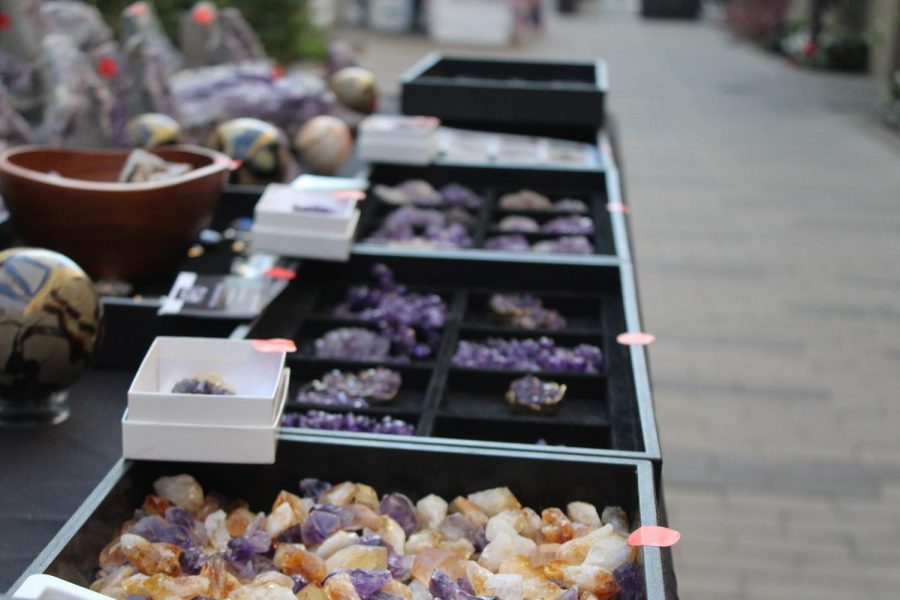
Il y a dix ans, si vous vouliez un cristal, vous alliez dans une boutique ésotérique. Aujourd'hui ? Vous pouvez en acheter un chez Sephora.
Le géant des cosmétiques propose désormais des outils gua sha en quartz rose et des rouleaux de massage facial dans sa collection permanente.Anthropologie, Huda Beauty et les grands magasins ont intégré à leurs gammes de produits des bouteilles d'eau infusées de cristaux, des accessoires de soin de la peau, des bijoux et des articles de décoration..
Ce n'est plus un marché de niche. C'est un catégorie de vente au détail.
Qu'est-ce qui a changé ? Deux choses. Premièrement, réseaux sociauxSur TikTok, le hashtag #crystals a dépassé 290 milliards de vues#laguérisonparlescristaux 33 milliardsLes diffusions en direct de Crystal attirent régulièrement des dizaines de milliers de spectateurs.. Deuxième, l'économie du bien-être Les cristaux sont passés du statut de pratique ésotérique à celui d'outil de bien-être. La même personne qui achète une bouteille d'eau infusée de cristaux à 40 dollars chez Sephora ne se considère peut-être pas comme une « guérisseuse par les cristaux ». Mais elle achète des cristaux — et c'est bien là l'essentiel.
Le facteur génération Z
Ce sont les jeunes consommateurs qui sont à l'origine de ce changement. Les 18-35 ans représentent plus de 45 % des acheteurs de cristaux.Et ils n'achètent pas pour les mêmes raisons que leurs parents.
L'Association américaine de psychologie a constaté que 68 % des membres de la génération Z souffrent d'anxiété au quotidien.. 42 % des consommateurs considèrent les cristaux comme une approche alternative pour la guérison psychologique.Les cristaux offrent quelque chose de tangible dans un monde anxiogène : un petit objet physique que l'on peut tenir entre ses mains quand tout semble hors de contrôle.
Un chercheur l'a formulé ainsi : « Lorsque la guérison semble inaccessible et que le langage est insuffisant, notre cognition individuelle se tourne généralement vers les symboles et les indices non verbaux. »Les cristaux sont ce symbole.
Où les sculptures trouvent leur place
C'est là que se trouvent les sculptures en cristal — crânes, animaux, sphères — devenir la véritable opportunité.
Les pierres roulées produites en masse sont des produits de consommation courante. pièces sculptées sont différentes. Elles requièrent du talent. Elles ont une présence. Elles donnent l'impression d'être art — ce qui signifie qu'ils se vendent à des prix plus élevés et attirent des acheteurs plus sérieux.
Les boutiques « Cristaux et Minéraux » ont vu croissance de 32 % pendant la pandémie — et contrairement aux autres catégories de produits spirituels au détail, Les boutiques de cristal ont maintenu leurs niveaux de revenus élevés.Cette longévité s'explique en partie par le fait que les collectionneurs passent des objets en métal aux sculptures. L'acheteur débutant devient un collectionneur averti. Et les collectionneurs avertis achètent des pièces sculptées.
Les penjing cristallins (paysages miniatures) avec des collines d'améthyste, des arbres de quartz rose et des pavillons de citrine sont devenus des choix populaires.Ce ne sont pas de simples bibelots. Ce sont des objets d'art — et les gens paient le prix d'objets d'art.
En résumé
Le marché des cristaux a bien changé ces dix dernières années. Il est plus vaste, plus grand public et plus diversifié. Le segment des cristaux de guérison et des bijoux spirituels devrait connaître une forte croissance. 5 à 10 % en 2026 après un déclin en 2025L'économie du bien-être au sens large approche 7,4 billions de dollars.
Le passage d'un marché de niche ésotérique à un marché de masse du bien-être est bel et bien réel. Et les détaillants qui l'ont compris — qui proposent des pièces sculptées aux côtés de pierres roulées, qui considèrent les cristaux comme des œuvres d'art plutôt que comme de simples marchandises — sont ceux qui sauront capter la prochaine vague de croissance.
Les commentaires sur r/Crystals sont justes. Les ventes de cristaux n'ont jamais été aussi élevées. La question est : avez-vous en stock ce qu'ils veulent réellement acheter ?


 English
 Français
 عربي
عربي Deutsch